Example 1
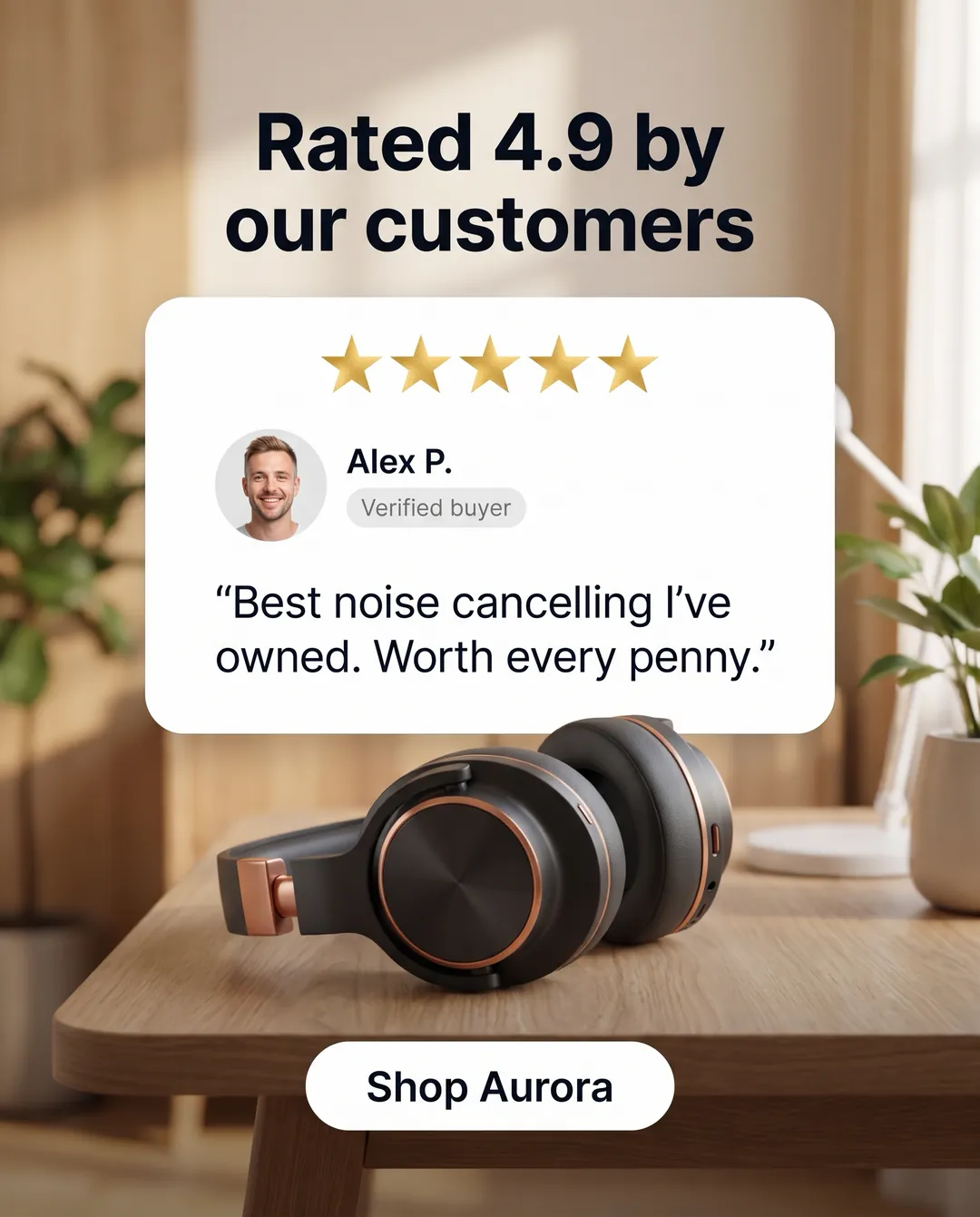
4.9-star review card over headphones
- Hook
- 'Rated 4.9 by our customers' in heavy black type, with a white review card and five gold stars right below.
- Offer
- No discount: the promise is social proof, a 4.9 rating plus one buyer calling it the best noise cancelling they have owned.
- Call to action
- 'Shop Aurora' on a white pill. Fine for warm traffic, and naming the brand in the button helps recall.
- Format
- Review card
Why it works
The review card copies the look of a review on a shop page, which people already trust. A white rounded card floats above a sunlit wooden desk with plants and a desk lamp. Inside are five gold stars, a round avatar photo, 'Alex P.' with a grey 'Verified buyer' tag, and the quote 'Best noise cancelling I've owned. Worth every penny.' Below the card, black over-ear headphones with copper accents lie on the desk, their warm accents matching the wood. The headline turns one review into a general claim by citing the 4.9 rating. That pairing is smart: the number gives scale and the quote gives a human voice. Weaknesses: '4.9' with no review count or source is a thin claim. Wording like '4.9 from [number] reviews' is far more convincing, and the figure must match your real average. The avatar shows a face, so use a reviewer's real photo only with permission, or show initials instead. FTC rules ban fake reviews, and AdCreator only builds testimonial ads from reviews you paste in.
Test next: Add the real review count and its source under the headline, for example 'from [number] reviews on our store', and test it against this version.